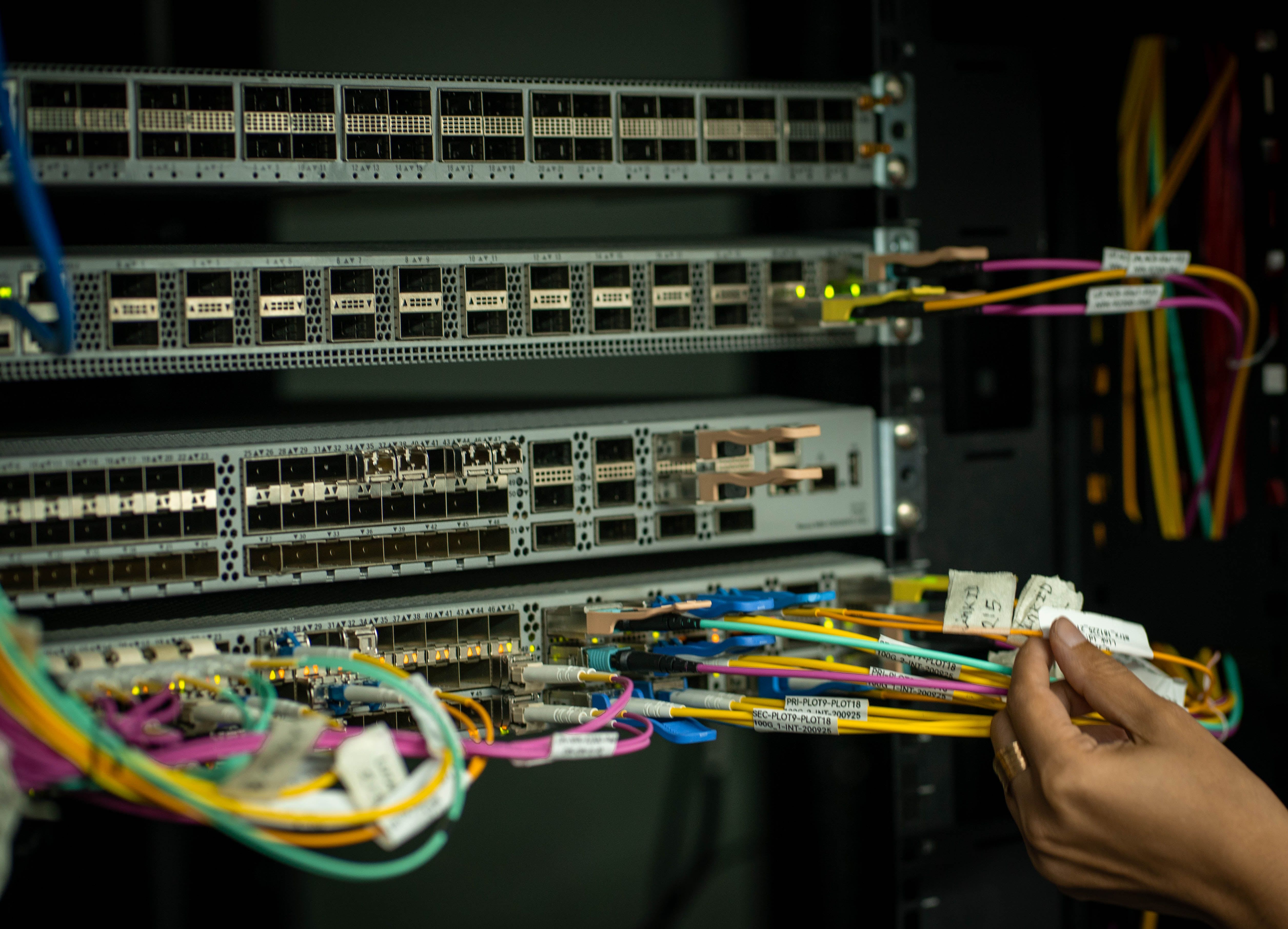
A hospital may run an EMR, a laboratory system, a pharmacy till and a separate billing package, each bought at a different time for a different reason. Every one of them works. None of them knows what the others know, so the facility employs people to carry information between screens. That is the cost of isolation, and it is paid daily in salaries and errors.
Integration is a product decision
It is tempting to file integration under engineering, as a task to schedule once the features are done. In practice it is a product decision, because it determines what the facility can promise a patient. A clinic that cannot see a result in its EMR cannot act on it promptly, however good the laboratory software is. The value of each application is capped by what it can reach.
This is why buying another module rarely solves the problem. Adding a system without a shared spine adds another boundary, another login and another reconciliation. The portfolio grows while the workflow fragments further.
The cost of the seam
Seams are visible in ordinary moments. A patient pays at the counter, then waits while the cashier confirms with the laboratory that the test was ordered. A dispenser checks a paper slip because the prescription in the EMR has no link to stock. A manager rebuilds yesterday's figures by hand because the till and the records count visits differently.
Each seam is a small tax, and taxes compound. They also concentrate risk in the people who bridge them. When the one clerk who understands the reconciliation is absent, the facility discovers how much of its process lived in a person rather than a system.
An ecosystem is not a suite of products sharing a logo; it is a set of systems sharing a fact.
Participation must be gradual
Not every facility can adopt a full stack at once, and insisting on it excludes the clinics that most need help. A connected ecosystem should therefore allow partial participation: a pharmacy that joins with stock and dispensing, a laboratory that joins with orders and results, a small clinic that joins with registration and encounters. The connections between participants matter more than the completeness of any one of them.
Every participant should be able to join at the level it can sustain, and still exchange something useful with everyone else. A shared identifier and one well-defined event are enough to start.
What a shared spine carries
- Identity. One patient reference, one facility reference, one practitioner reference, used consistently across applications.
- Events. Registration, order, result, dispense and payment expressed as facts that other systems can subscribe to.
- Terminology. Shared codes for medicines, tests and diagnoses, maintained in one place rather than four.
- Permissions. A single model of who may see what, applied wherever the record is displayed.
How the transition usually runs
Inventory the seams
List every place where information is retyped or carried by hand. That list, not a vendor catalogue, is the integration roadmap.
Unify identity
Consolidate patient and facility references before connecting workflows. Duplicate identities undermine every exchange built on top of them.
Publish the core events
Expose a small number of well-defined events, such as an order or a verified result, with clear ownership and timing.
Retire the parallel books
Once a flow is connected, stop maintaining the duplicate record. Leaving both alive guarantees that they diverge.
The order is deliberate. Identity first, then events, then the removal of workarounds. Skipping the last step is the most common reason a successful integration project leaves no trace in daily practice.
What this means
The future of healthcare software in this region is not a single giant application that does everything. It is a set of focused systems that agree on a few essential facts and can be adopted in the order a facility can afford.
That future requires vendors to treat connection as part of the product rather than an upsell, and facilities to treat the removal of manual bridging as part of go-live. Without both, the ecosystem remains a slide, and the clerk with the folder remains the integration layer.